Practice 04 · reviewed 10 August 2026
Ask how the object came to be.
“Authentic” is too vague to describe labour. Maker, material, construction, place of sale and lawful movement produce a more honest conversation—and usually a better object.
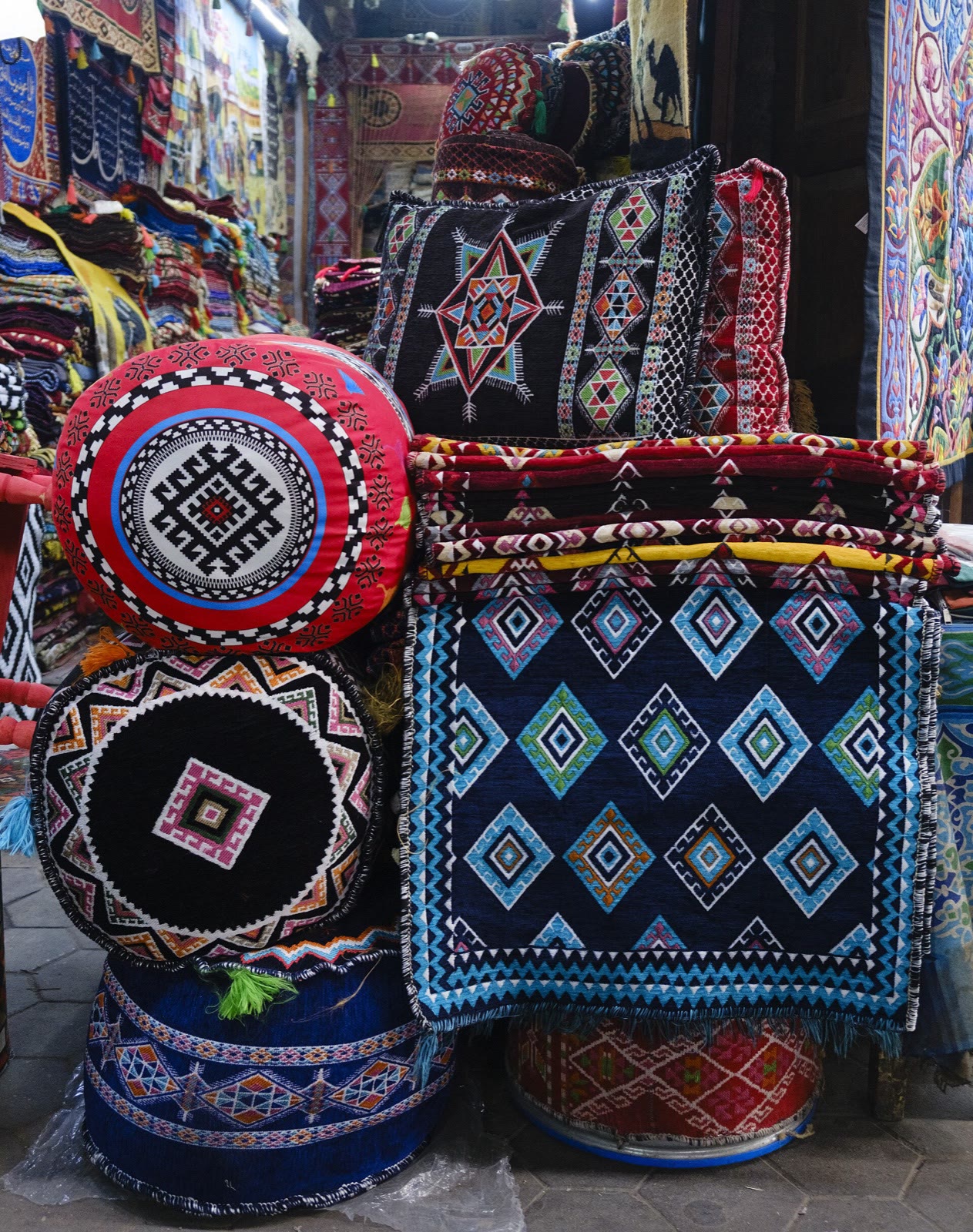
Markets encourage instant recognition: “handmade,” “local,” “traditional,” “antique.” These words can be true, partly true or used loosely. A responsible buyer does not need to interrogate every seller. A few concrete questions reveal more than a demand for authenticity and show respect for the labour behind the object.
Replace authentic with specific
Ask who made the piece and where. Was it made by the seller, a family workshop, another Egyptian producer or imported? Is the material cotton, wool, wood, metal, glass, stone or a synthetic substitute? Is the design cut, appliquéd, woven, printed, carved, cast or assembled?
A seller may not know every stage, and an imported or machine-made object is not automatically dishonest if represented accurately. The problem is a false story. Choose the object according to what it is, the skill it contains and the value you place on it.
Use khayamiya to study construction
Khayamiya is associated with decorative textile work traditionally connected to tentmaking. Contemporary pieces vary in scale, design, material and market. Look at the reverse where appropriate, the edges of applied cloth, the regularity of stitching and the way a pattern turns a corner. Do not handle work without permission.
Ask whether the design was hand-cut and stitched, printed, or combined through several processes. Time and complexity affect price. A small panel with dense handwork may represent more labour than a larger printed piece.
| Instead of | Ask | Why it helps |
|---|---|---|
| “Is this real?” | “Who made this and how?” | Invites a specific production story |
| “Best price?” | “Is the price fixed, and what is included?” | Clarifies the transaction before bargaining |
| “Is it old?” | “Is this newly made, vintage or documented?” | Separates age from appearance |
| “Can I take it home?” | “Are there material or export documents?” | Moves the question toward lawful movement |
Let price reflect labour
Bargaining customs differ among shops, workshops and formal institutions. First determine whether negotiation is expected. If it is, keep the exchange calm and proportionate. Do not turn a maker’s time into a game over an amount that is insignificant to you. If the price does not fit, decline politely.
Clarify currency, packaging, shipping, card fees and delivery before payment. For commissioned work, record dimensions, material, design, deadline, deposit and how approval will be handled. A verbal promise may be culturally normal in some contexts, but a simple written summary protects both parties across language and distance.
Designs and processes may be commercially sensitive, and the maker remains a person rather than part of the display.
Do not buy the archaeological past
Objects presented as ancient, excavated or found should trigger refusal, not excitement. Cultural-property and customs laws can restrict antiquities and other materials. An attractive story, receipt or seller assurance does not establish lawful origin. Consult current Egyptian authorities and the destination country’s customs rules for any potentially restricted object.
Also check restrictions for wildlife products, coral, certain woods or other natural materials. Responsible purchase includes the ability to move the object legally and without supporting environmental harm.
Keep style from becoming a stereotype
Egyptian makers work within heritage traditions, contemporary design, tourism markets and global material supply. “Traditional” does not mean unchanged; “modern” does not mean less Egyptian. Ask how the maker describes the work. Avoid forcing every pattern into an ancient-symbol explanation that the maker does not claim.
Compare construction before committing
Look at several pieces without asking every maker to defend a price. Compare edge finishing, joins, weight, reverse side and the consistency appropriate to the technique. Handwork can include variation; variation alone does not prove quality or authenticity. The comparison is meant to educate the eye, not produce a public ranking of sellers.
If the object is fragile or large, ask how it should be rolled, folded, wrapped or supported. Poor transport can destroy the labour the purchase was meant to value.
Record the object’s honest biography
Keep the maker or shop name if provided, place and date of purchase, stated material, technique and care instructions. Add the receipt and any lawful-export documentation where relevant. When you show the object later, tell that specific story. A truthful biography gives craft more dignity than a vague souvenir legend and helps future owners care for it accurately.
How we workRead the editorial method→