Practice 01 · reviewed 10 August 2026
Read the wall before the caption.
Translation matters. So does the visual system that makes the scene legible before a word is read. Five short observations turn “hieroglyph-covered wall” into organised evidence.
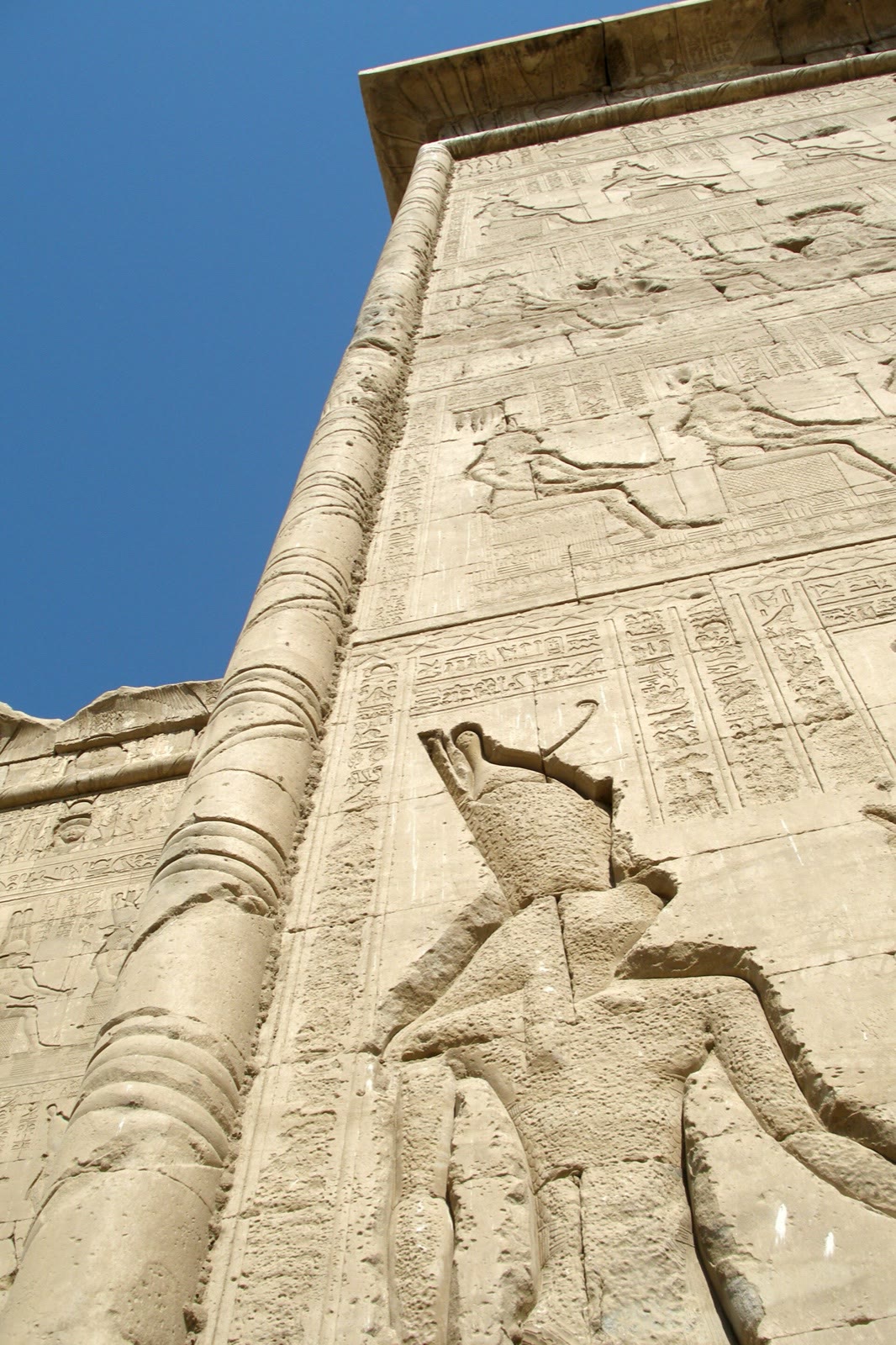
A relief can overwhelm the first-time viewer because image and writing occupy the same surface, figures repeat and the wall may be densely divided. Reading every sign is not the only path into the scene. Egyptian visual composition uses boundaries, direction, proportion, gesture and repeated attributes. Describing them carefully creates questions that the caption or guide can then answer.
1. Find the visual unit
Begin by identifying the scene’s edges. Horizontal registers may divide activity into stacked bands. Vertical lines, door frames, columns or changes in surface can separate one episode from another. Do not assume the museum crop or the modern barrier matches the ancient visual unit.
Count the major figures and note whether the composition continues beyond the visible area. A damaged edge may remove the person or deity toward whom a surviving figure faces. The missing space is evidence, not an invitation to invent a complete story.
2. Track direction and gaze
Which way do bodies, faces and hieroglyphic signs orient? Egyptian figures often combine profile and frontal conventions rather than representing one optical viewpoint. Direction can lead the eye toward a central encounter, offering table, shrine or larger figure. Reversal can mark a second scene or create symmetry.
Write a simple sentence: “Three smaller figures move left toward one larger seated figure.” This is description. Naming the individuals is interpretation and should wait for inscription, attribute and reliable context.
3. Compare scale without calling it perspective
Larger figures may indicate status or importance rather than physical distance. Servants, captives, children, rulers and deities can be organised through hierarchical scale. Look for baseline, overlap and placement as well as height. A tiny figure beneath a hand may carry a different relationship from a small figure in a separate register.
| Observation | Possible question | Premature claim |
|---|---|---|
| One figure is twice as tall | Does scale express status here? | “This person was literally a giant” |
| All faces turn inward | What encounter centres the scene? | “They are looking at the king” |
| Hands hold repeated objects | Are these offerings or attributes? | “I know what every object means” |
| Colour survives in recesses | What protected those areas? | “The wall was originally bare stone” |
4. Name gesture and object literally
Before translating an object into a symbol, describe it: curved staff, vessel, plant form, crown shape, raised hand. Repeated objects can identify roles or actions, but their meaning depends on period, place and inscription. A guidebook glossary is useful after the literal note, not instead of it.
Hands matter. Who gives, receives, protects, strikes, presents or embraces? Where do hands overlap an object or body? Gesture often carries the verb of the image while inscription specifies participants and ritual language.
5. Read the surface as history
Relief may be raised or cut into the surface. Chisel marks, pigment, plaster, soot, deliberate damage, weathering and modern repair can coexist. Observe the angle of light: raking light strengthens an edge, while direct light can flatten it. Never improve visibility by touching, wetting or tracing the surface.
Where pigment remains, ask what recess, ceiling, shelter or later covering protected it. Do not digitally intensify colour and then treat the edit as material evidence.
Now use the caption
Read the official label, site panel or specialist explanation. Which observations does it explain? Which names come from inscriptions? Which date is based on archaeological context? If the label uses a term such as “offering scene,” return to the wall and identify the visible action that supports it.
Translation requires language expertise and historical context. The five-step method does not replace either. It helps the non-specialist ask disciplined questions and remember that an image communicates through form as well as text.
Make a one-wall record
- Sketch the outer boundary and registers.
- Draw arrows for dominant direction.
- Mark the largest and smallest figures.
- List two gestures or objects without naming their symbolism.
- Record one surface change.
- Add the caption’s interpretation in a different colour or paragraph.